Thursday, July 26, 2012

Why we screen with the latest technology!


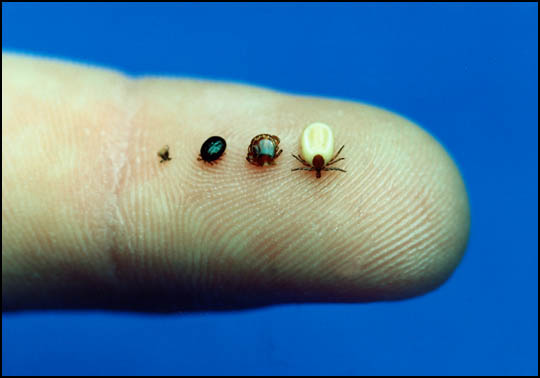
The incidence of tickborne disease is on the rise. At NHAH, we screen annually for heartworm disease along with several other diseases that can be transmitted from ticks. A few facts:

 What are some of the diseases carried by ticks and mosquitoes?

• Lyme disease is transmitted by the deer tick or black-legged tick and can be
found in every U.S. state and Canadian province. Dogs are 50% more likely than
people to contract Lyme disease.

• Canine anaplasmosis is a disease that is caused by the organisms Anaplasma
phagocytophilum, which is transmitted by the deer tick and black-legged tick,
and Anaplasma platys, transmitted by the brown dog tick.

 • Canine ehrlichiosis is caused by the bacteria Ehrlichia canis which is
transmitted by the brown dog tick and Ehrlichia ewingii which is transmitted by
the lone star tick.

• Heartworm disease is transmitted by mosquitoes. Despite high awareness
with pet owners, infection rates haven’t changed in 10 years.

How could my dog become infected?
• Ticks and mosquitoes often carry parasites and bacteria that cause
disease. They can be transmitted to your pet if an infected tick or mosquito
bites them.

• Your dog can be exposed to infection in almost any outdoor location where ticks
and mosquitoes can be found, and risk varies from region to region.

• Your pet may not show any immediate signs of infection, making diagnosis
difficult. Testing is the only way to know for sure if your dog has been exposed.

What can I do to help?

• Use a tick preventative on your dog. Watch them closely for changes in
behavior or appetite and call your veterinarian with any concerns.

• Call your veterinarian immediately if you recognize any of the following signs:
lameness, swollen or painful joints, lack of energy, loss of appetite/weight loss,
vomiting, diarrhea.

• Check your dog for ticks daily. If you find a tick, go to dogsandticks.com for
proper removal procedures. Call your veterinarian for assistance and
to schedule a follow-up visit.

• Bring your dog in for a vector-borne disease screening at least once a year.

If infected, regular testing can provide early detection, which can improve
your dog’s prognosis.

Thursday, July 19, 2012

The danger lurking outdoors!


The great outdoors may sound like fun for a cat but there are many dangers lurking outside for our feline friends. Veterinarians and shelters strongly advise that all cats be kept indoors only or allowed outside only under supervision. Consider some of the outdoor dangers to your feline friend:

Cars
Your cat can get hit by a car or climb under a car hood to get warm and then get caught in the radiator fan when the engine is started. Cats also like the sweet taste of anti-freeze which is poisonous.

Rabies
There is an increased presence of rabies in New York! In fact, there was a rabid racoon found  Once contracted, it is fatal and presents a serious risk to your family as well. It is much more likely that people will contract rabies from a family pet that tangles with a wild animal, rather than the wild animal itself. When your cat goes out by itself, you have no idea where it has been or what animals it has come into contact with. Vaccinating your cats and dogs is the law.

Dogs or Other Animals
Dogs or other animals can attack, severely injure or kill your cat. This is not something that could happen — it happens all the time.


Wildlife
While outside, your cat could become injured, killed by a wild animal, or attack and cause problems for area wildlife. In fact, it is no surprise that domestic cats bear a big responsibility for the decline of many local songbird populations, as well as many small
mammals.

Parasites
Cats are hunters by nature. Many cats eat small, wild animals and become infested with parasites such as tapeworms, roundworms, hookworms, coccidia and ear mites. The best way to prevent fleas? Keep your cat in a flea-free environment — inside your home! Monthly flea prevention is best, even with indoor cats.
Neighbors
Your neighbors may not want your cat trespassing onto their property and killing the songbirds they love to watch and feed, using their garden or sandbox as a litter-box, or upsetting their own pets.

Getting Lost or Trapped
Your cat might never come home again. It might lose its bearings and wander too far from home. Elderly cats quickly become disoriented outside. Your cat could also get accidentally locked in a neighbor’s basement or shed or be severely maimed or killed in a trap.

Diseases and Catfights
Cat fights can and do result in serious injuries or abscesses and pass deadly feline diseases like Feline Leukemia (FeLV) and Feline Immunodeficiency Virus (FIV). Upper respiratory infections (URI) and Distemper are also serious threats to cats that go outdoors — especially if they are not vaccinated. Even if your own cat is vaccinated, the risk of coming into contact with infected cats is far greater when your cat is going outside. Remember no vaccines afford 100% protection.

Breeding and Pregnancy
We all know there are too many homeless kittens in the world today. The overpopulation tragedy is why responsible pet owners spay their females and neuter their males. But remember, even if you plan on spaying or neutering your cat, he can breed before the surgery is done.

Poisons
Anti-freeze, weed-killer, and other chemicals used in gardening or lawn care could kill your cat.

Pet Theft, Abuse, and Torture
Your cat could be tortured, stolen and sold for laboratory research, or abused in some sort of cult ritual.

Cats will live longer, healthier lives when kept indoors only. The average life span for a cat that goes outside is 16 months; for a cat that stays inside, it is 16 years. That’s worth staying indoors for!


Wednesday, July 11, 2012

What you should know about parvo


Parvovirus is a highly contagious viral disease that can produce a life-threatening illness. The virus attacks rapidly dividing cells in a dog’s body, most severely affecting the intestinal tract. Parvovirus also attacks the white blood cells, and when young animals are infected, the virus can damage the heart muscle and cause lifelong cardiac problems.

In most cases, this virus causes extreme damage to the intestinal tract, causing sloughing of the cells that line the tract. This can leave the patient open to secondary bacterial infection. Most of the affected dogs (85%) are between 6-20 weeks old. Younger dogs contract the virus because their full set of vaccinations aren't given until they reach a certain age. The death rate from infection is reported to be 16-35% in this age group. Some intestinal signs include:

· Lethargy
· Vomiting
· Loss of appetite
· Diarrhea - usually bloody, and very foul-smelling
· Fever

The onset of clinical signs is usually sudden, often 12 hours or less. The incubation from exposure to seeing the clinical signs varies from 3 to 10 days.

Parvovirus is diagnosed by physical examination, medical history, and a fecal Parvo test. Additional diagnostics include blood work and radiographs. Dogs infected with Parvo typically have a low white count. Radiographs help rule out other potential causes for vomiting and diarrhea.

Parvovirus is extremely contagious and can be transmitted by any person, animal or object that comes in contact with an infected dog's feces. Highly resistant, the virus can live in the environment for months, and may survive on inanimate objects such as food bowls, shoes, clothes, carpet and floors. It is common for an unvaccinated dog to contract parvovirus from the streets, especially in urban areas where there are many dogs.

The Parvovirus family of viruses are particularly long-lived in the environment, lasting anywhere from 1 to 7 months -- commonly surviving 5-7 months in an outside environment. Due to the large amounts of virus particles shed in the feces of an infected dog (shedding lasts two weeks or more after exposure) and the longevity of the virus, complete eradication of the virus is often impossible.

There are many Parvovirus disinfectants on the market, but regular bleach is still 100% effective against Parvovirus and what we choose to use for disinfection.

If you think your pet may not be properly vaccinated or you would like more information about parvovirus, talk to your veterinarian. Ilness is much better prevented than treated!


Wednesday, July 4, 2012

What is a luxating patellar?

Patellar luxation is hereditary and especially common in small and toy breeds of dogs. Affected animals may also have other leg or joint problems. The patella (or kneecap) lies in a "track" on the front of the leg, where it functions in joint movement, sliding up and down easily as the knee bends and extends. In some dogs and less commonly in cats, the patella does not stay in its track, occasionally slipping (or luxating), usually to the inside of the leg. When this happens, it is called patellar luxation.


Signs of patellar luxation in pets vary depending on how severe the problem is. Most pets tend to skip or hop when walking or especially when running, but some dogs and cats may hold the leg up completely. Damage caused by the kneecap slipping in and out of its track can eventually lead to arthritis in the knee.

Your veterinarian can generally diagnosis this problem by palpating the knee joint, but x-rays are often recommended to look for arthritis or other problems.

Many pets with patellar luxation do fine without any treatment or with only occasional pain relievers or anti-inflammatory medication. Surgery may be needed in more severe cases or in overweight pets that typically have much more of a problem when the patella slips. Getting your pet's weight under control is important in management of this condition in overweight pets.

If surgery is required, it is often extremely successful and with proper recovery, will correct the problem. Our veterinarians are very experienced with this type of surgery. Visit our website to read about our pet of the month "Pearl" who just had this surgery performed a few weeks ago!


Some material taken from John A. Bukowski, DVM, MPH, PhDand Susan E. Aiello, DVM, ELS 

Wednesday, June 27, 2012

Pets have pain too!


We like to think our pets are always happy and healthy. Afterall, they are usually wagging their tails or purring like happy kittens. But the reality is that sometimes our pets experience pain just like we do. Whether they hurt their paw, have a tooth infection, are recovering from surgery, or simply getting older, our pet's feel pain from the same things we do. The big difference between our pain and their pain is that they cannot tell us when they are hurting. We sometimes know because they cry or will not eat. But other times, they are stoic and mask their pain so we don't know they are hurting.

The American Animal Hospital Association (AAHA) and the American Association of Feline Practitioners (AAFP) have recently instituted new guidelines for pain management.  As an accredited practice of both organizations, and because we believe it is so important, NHAH created our own pain management protocols a number of years ago.

Managing pain is good medicine.  Uncontrolled or poorly controlled pain can cause serious medical consequences such as increased fatigue, decreased sleep and even delayed healing.  In human medicine, pain is considered the fifth vital sign and must be evaluated in every patient.

 At NHAH, we assess every patient for pain, even if they are here for a preventive visit.  We take pain in our patients seriously.  Every surgical patient receives pain medication and in some cases, acupuncture treatment. Acupuncture has many uses for promoting health but one of the best benefits is that it treats and controls pain. During recovery, and throughout their hospital stay, each patient is continually monitored for pain. And when needed, our patients are sent home with pain medication.

Pain can be hard to detect in pets because they tend to hide their symptoms.  It helps if our doctors and staff  have a close relationship with patients so that we can detect even the slightest behavior changes that may indicate discomfort.

We care about making your pet comfortable and continually strive to improve pain management protocols and techniques to make sure your pet remains as happy and healthy as possible!


Wednesday, June 20, 2012

One Size Does Not Fit All!


The "one size fits all" pet food philosophy may sound good but it goes against what veterinarians and food specialists have learned in more than six decades of clinical nutrition research. A food that's appropriate for puppies will contain levels of fat, sodium, protein and other nutrients that are too high for older pets. Likewise, a food that contains reduced levels of nutrients for older pets may be inadequate for growing puppies and kittens.

Today, many pet food manufacturers offer lifestage foods for pets. At New Hartford Animal Hospital, we trust Hill's Science Diet. Hill's offers many presciption diets as well as lifestage diets that are appropriate (and sometimes medically necessary) for many of our patients. Choosing a Hill's® Science Diet® brand lifestage pet food gives you peace of mind in knowing you're feeding nutrition from a company with 60 years of experience in formulating pet foods with optimum nutrient levels.

Other companies often tout the benefits of their foods for puppies and kittens, adults or seniors and say that thie foods are perfectly balanced for each of these lifestages. However, many of these same companies also offer brands of pet food that carry the claim                "... complete and balanced nutrition for all lifestages"!

The Association of Animal Feed Control Official's (AAFCO) statement on a dog food label verifies that the food provides complete and balanced nutrition for either:

·                                 puppies or kittens
                         pregnant or nursing pets
                         adult pets
                         all lifestages

AAFCO testing procedures are important but we believe that no single food is appropriate for all lifestages. It is important to choose a food that will provide proper nutrition for your pet. Talk to your veterinarian to make sure you are giving the best you can to your favorite companion!


http://www.hillspet.com/dog-care/one-size-does-not-fit-all-puppy.html

Wednesday, June 13, 2012

Cats get Heartworm Disease Too!!

Heartworm Disease is a risk you won’t see until your cat is infected.  Pampered princess or inquisitive prowler, your cat is at risk of exposure to potentially deadly heartworms.  But don't despair - heartworm disease can be prevented!

Heartworm disease in cats is on the rise and the number of cats diagnosed with this disease continues to increase. Its prevalence has increased because we live in such a mobile society - people and their pets travel from place to place, unknowingly taking parasites along for the ride. Cats of any age and type are susceptible, and the disease can be fatal.

The parasitic worm responsible for heartworm disease is called Dirofilaria immitis. Heartworm disease transmission begins when a mosquito bites an infected dog and draws in a small amount of blood in which tiny immature heartworm larvae are circulating. (Dogs are the usual reservoir from which mosquitoes acquire the larvae that become infective and may be transmitted to animals that include dogs and cats).

Within 2 to 3 weeks the heartworm larvae develop inside the mosquito. When that same mosquito then bites a cat, heartworm larvae are deposited on the cat's skin. The larvae migrate through the tissue and into the bloodstream where they continue to develop. Within 4 months, heartworms reach the heart and lungs and may cause heartworm disease. As few as one heartworm may cause permanent damage or even death in cats. Diagnosing heartworm disease may require several tests because blood tests that work well for dogs are not always reliable in cats. There is no approved treatment for feline heartworm disease.

Whether your cat is an "outdoor" or "indoor" pet, it's at risk of exposure to heartworms. Fortunately, heartworm disease in cats can be prevented. The preventive medication protects against heartworm disease and also several internal parasites as well! Ask your veterinarian about heartworm prevention for your cat today!


By Sheila Casler, Practice Manager NHAH